

 Image 1 of 3
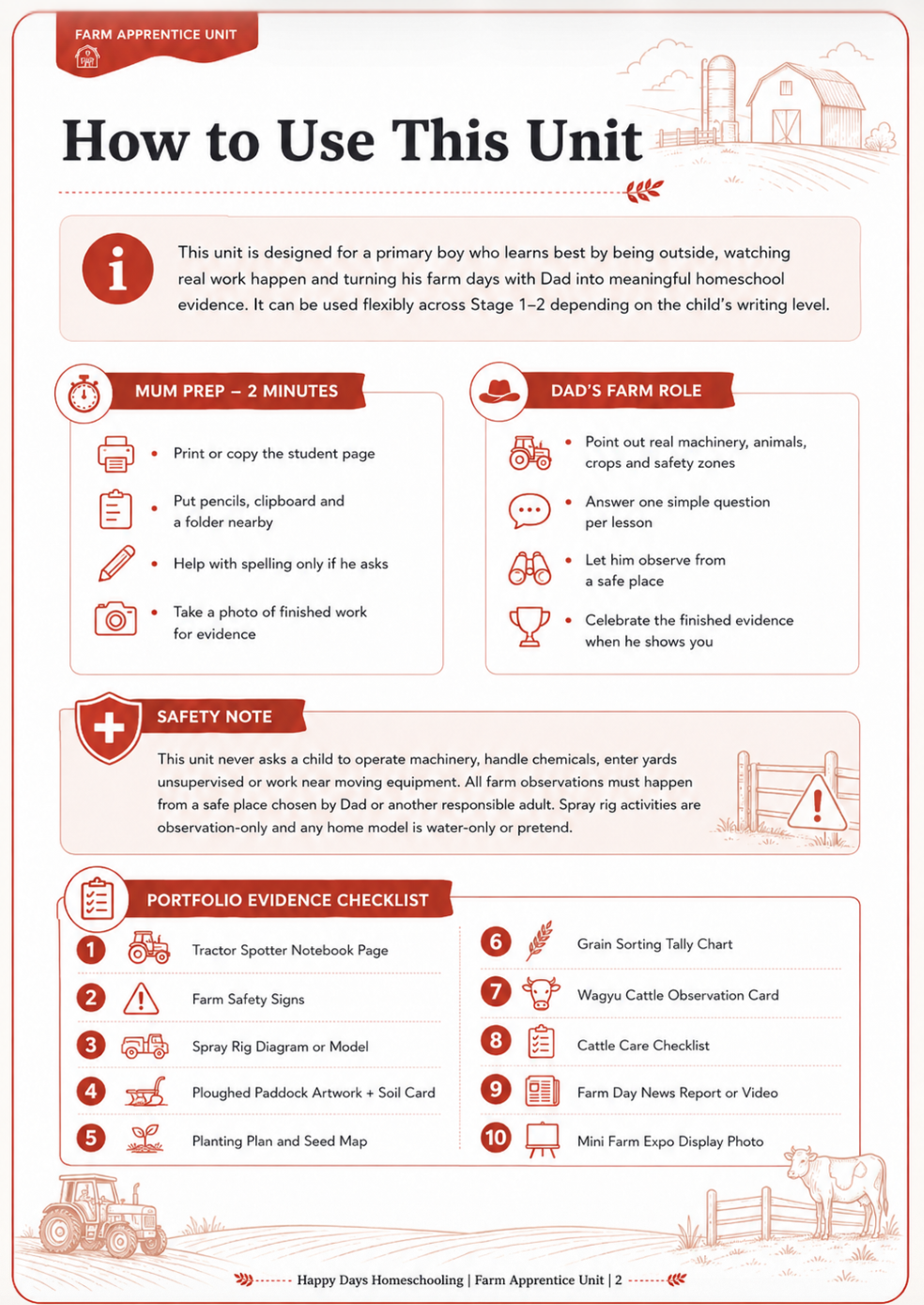 Image 2 of 3
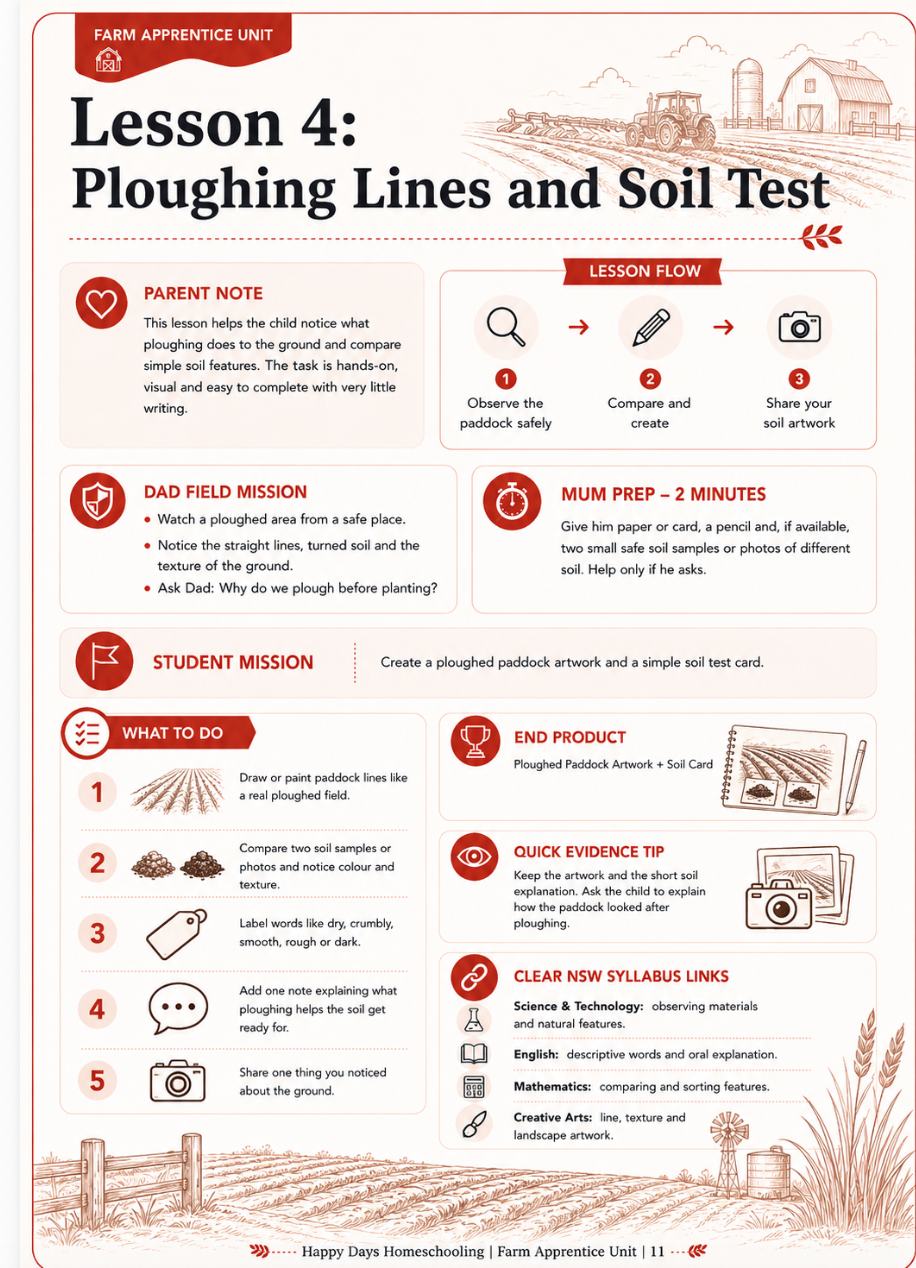 Image 3 of 3
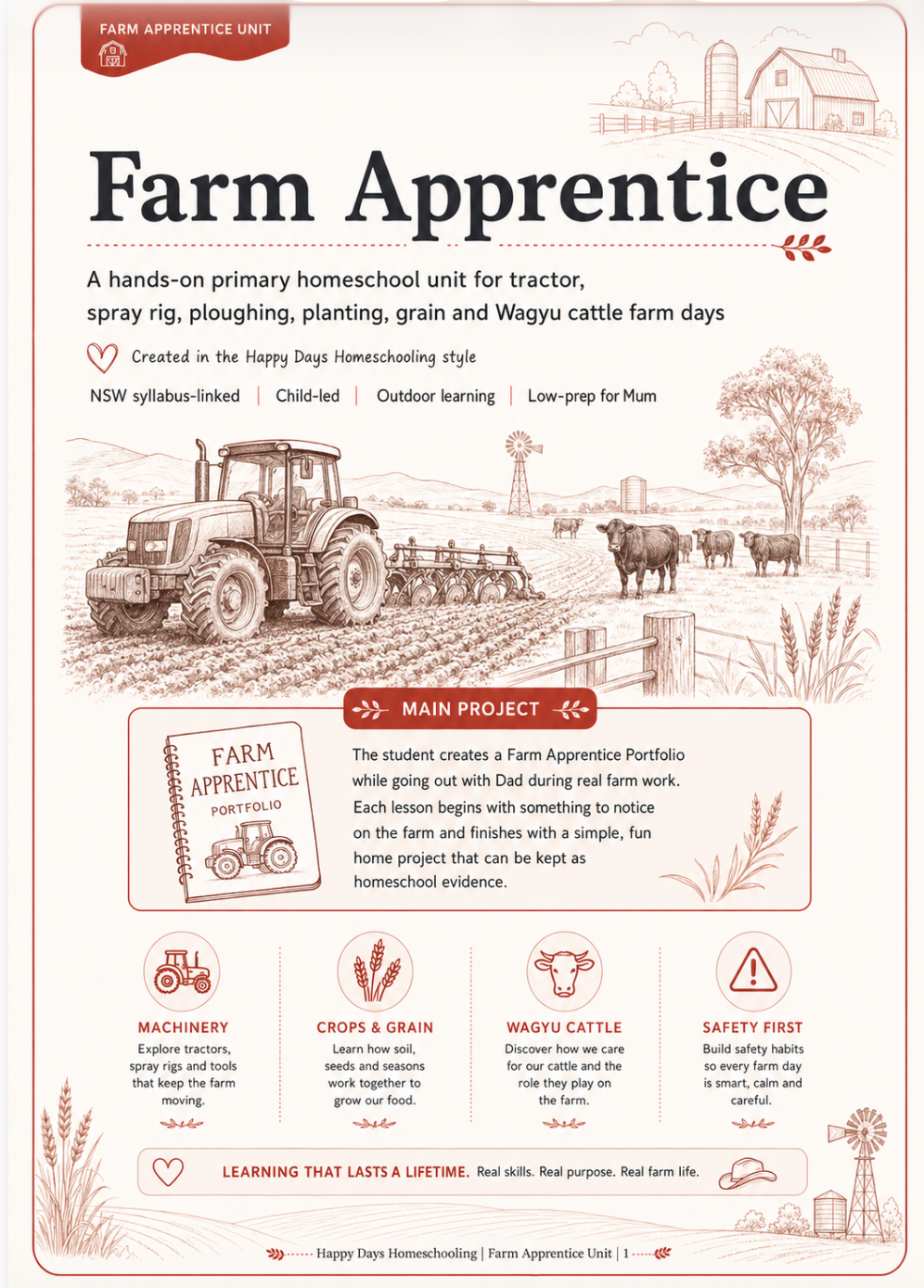
The Farmer Junior Apprentice unit is a hands-on, practical learning adventure designed for primary-aged children who love being outdoors, exploring how things work, and getting their hands dirty. Students step into the role of a young farm apprentice as they investigate animals, crops, soil, composting, tools, weather, simple farm systems, and the everyday problem-solving skills needed to run a small farm or homestead.
Across the unit, children take part in real-world tasks such as planning a garden bed, observing animal needs, exploring paddock-to-plate food journeys, building simple farm structures, testing soil, recording weather, designing signs, creating farm maps, and completing outdoor challenges. The activities are designed to feel practical and purposeful rather than worksheet-heavy, making it ideal for active learners who benefit from movement, nature-based learning, and clear end products.
This unit naturally connects with Science, Technologies, Geography, English, Mathematics, Health, and The Arts through observation, measurement, design, mapping, writing, problem-solving, sustainability, and creative presentation tasks. Students build a strong portfolio of evidence through photographs, drawings, labelled diagrams, short reflections, maps, plans, and completed projects.
By the end of the unit, students will have developed a deeper understanding of where food comes from, how farms operate, how people care for animals and land, and how sustainable choices can support healthy homes, communities, and environments. The unit is flexible, parent-friendly, low-prep, and perfect for homeschool families wanting learning that feels meaningful, active, and connected to real life.
The Farmer Junior Apprentice unit is a hands-on, practical learning adventure designed for primary-aged children who love being outdoors, exploring how things work, and getting their hands dirty. Students step into the role of a young farm apprentice as they investigate animals, crops, soil, composting, tools, weather, simple farm systems, and the everyday problem-solving skills needed to run a small farm or homestead.
Across the unit, children take part in real-world tasks such as planning a garden bed, observing animal needs, exploring paddock-to-plate food journeys, building simple farm structures, testing soil, recording weather, designing signs, creating farm maps, and completing outdoor challenges. The activities are designed to feel practical and purposeful rather than worksheet-heavy, making it ideal for active learners who benefit from movement, nature-based learning, and clear end products.
This unit naturally connects with Science, Technologies, Geography, English, Mathematics, Health, and The Arts through observation, measurement, design, mapping, writing, problem-solving, sustainability, and creative presentation tasks. Students build a strong portfolio of evidence through photographs, drawings, labelled diagrams, short reflections, maps, plans, and completed projects.
By the end of the unit, students will have developed a deeper understanding of where food comes from, how farms operate, how people care for animals and land, and how sustainable choices can support healthy homes, communities, and environments. The unit is flexible, parent-friendly, low-prep, and perfect for homeschool families wanting learning that feels meaningful, active, and connected to real life.