 Image 1 of 3
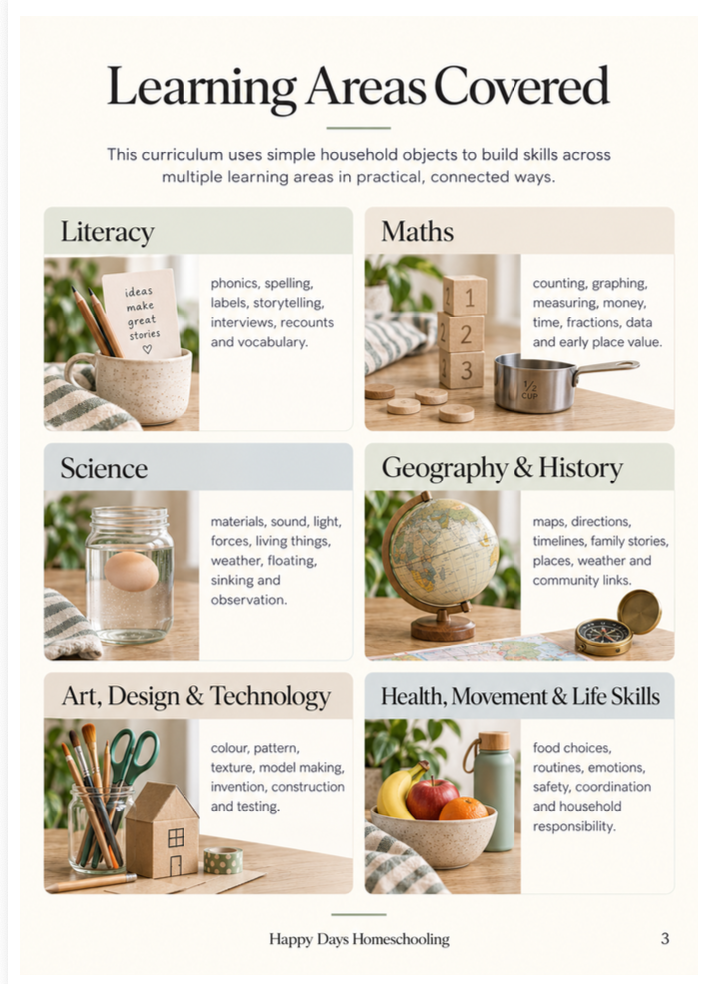 Image 2 of 3
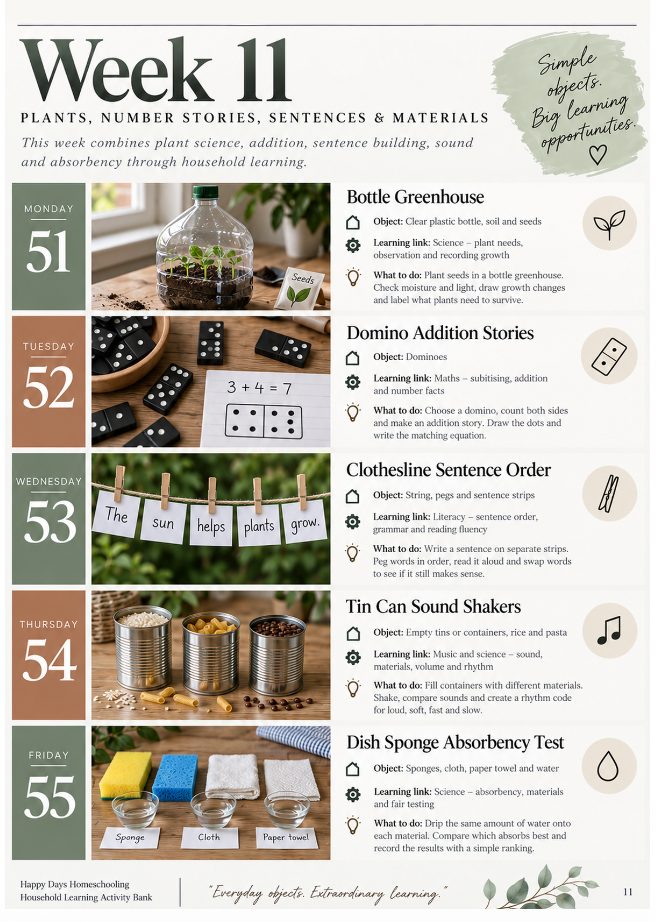 Image 3 of 3
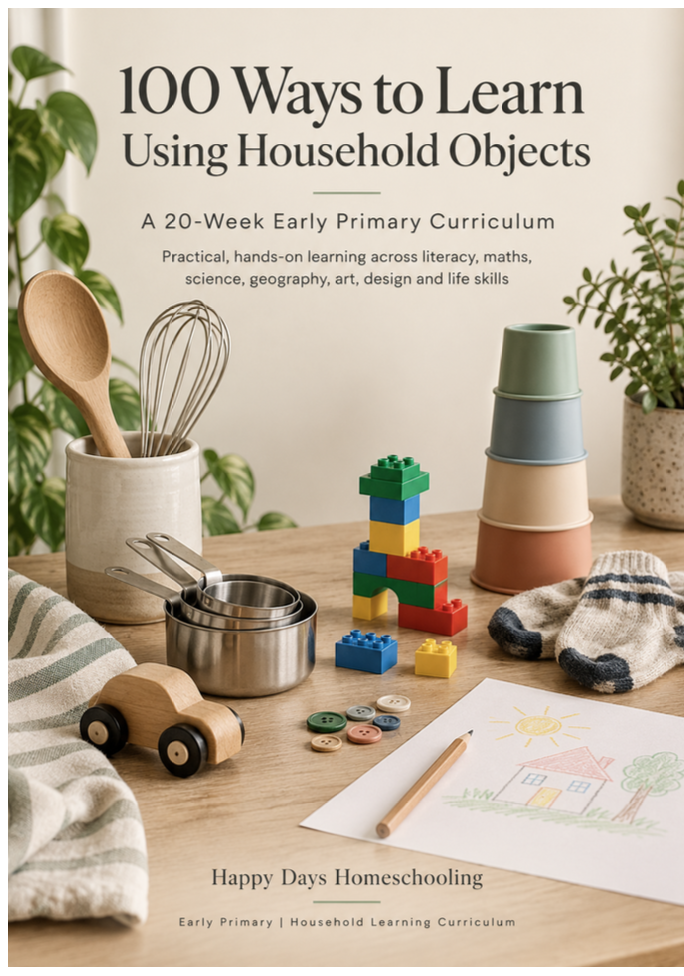
100 Ways to Learn Using Household Objects is a practical early primary curriculum designed to turn ordinary items around the home into meaningful learning experiences.
Across 20 weeks, children complete simple hands-on activities that build skills in literacy, maths, science, geography, history, art, design, health and life skills. Activities include sorting, measuring, counting, mapping, spelling, building, experimenting, observing, creating and problem-solving using familiar objects such as cups, socks, buttons, toys, kitchen utensils, cardboard, jars and paper.
The program is designed to be low-prep, flexible and easy to use at home, with one activity for each weekday. Each task includes the materials needed, the learning focus and clear instructions, making it easy for parents to see the educational purpose behind the activity.
Rather than relying heavily on worksheets, this unit encourages children to learn by doing, talking, testing, making and discovering, while giving families simple opportunities to record learning through photos, drawings, short written responses, graphs, labels and oral explanations.
It is a gentle, engaging way to cover a wide range of early primary skills while showing children that learning can happen anywhere — using things they already have at home.
100 Ways to Learn Using Household Objects is a practical early primary curriculum designed to turn ordinary items around the home into meaningful learning experiences.
Across 20 weeks, children complete simple hands-on activities that build skills in literacy, maths, science, geography, history, art, design, health and life skills. Activities include sorting, measuring, counting, mapping, spelling, building, experimenting, observing, creating and problem-solving using familiar objects such as cups, socks, buttons, toys, kitchen utensils, cardboard, jars and paper.
The program is designed to be low-prep, flexible and easy to use at home, with one activity for each weekday. Each task includes the materials needed, the learning focus and clear instructions, making it easy for parents to see the educational purpose behind the activity.
Rather than relying heavily on worksheets, this unit encourages children to learn by doing, talking, testing, making and discovering, while giving families simple opportunities to record learning through photos, drawings, short written responses, graphs, labels and oral explanations.
It is a gentle, engaging way to cover a wide range of early primary skills while showing children that learning can happen anywhere — using things they already have at home.